

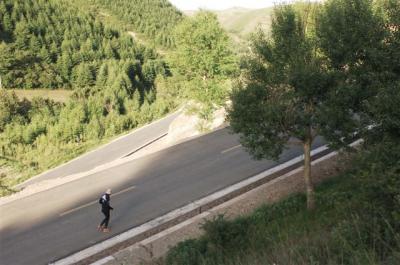
Une belle montée pour commencer. Photo Thomas BREGARDIS
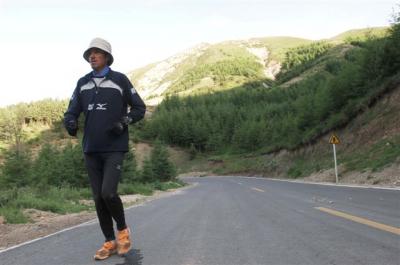
Et oui Serge; le sommet est encore loin. Photo Thomas BREGARDIS
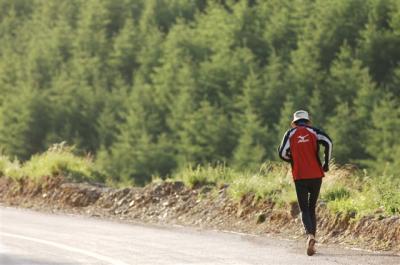
La température grimpe de plus en plus. Photo Thomas BREGARDIS
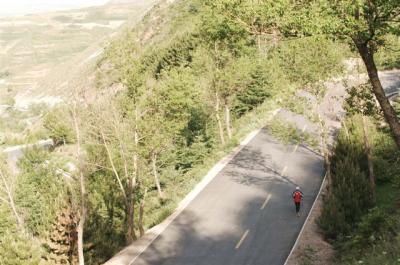
Seul dans la montée. Photo Thomas BREGARDIS
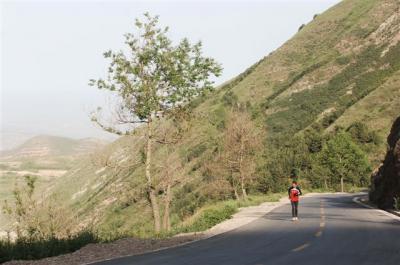
Bientôt le sommet. Photo Thomas BREGARDIS
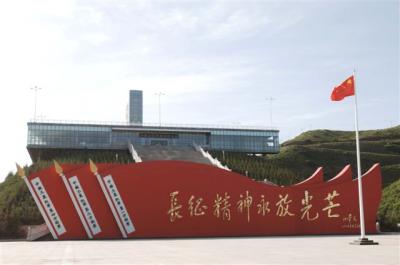
Mémorial de la huitième armée. Photo Thomas BREGARDIS
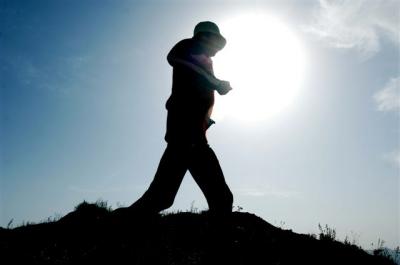
Sous un soleil de plomb. Photo Thomas BREGARDIS
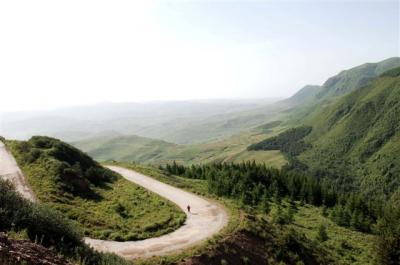
Une belle descente. Photo Thomas BREGARDIS
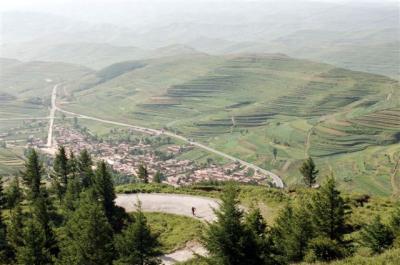
Dans la vallée. Photo Thomas BREGARDIS
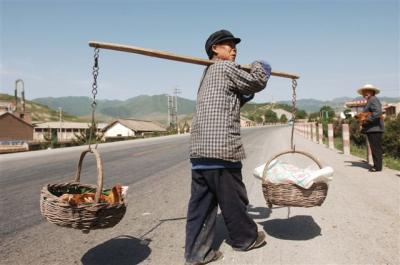
Vieil homme et sa poule. Photo Thomas BREGARDIS
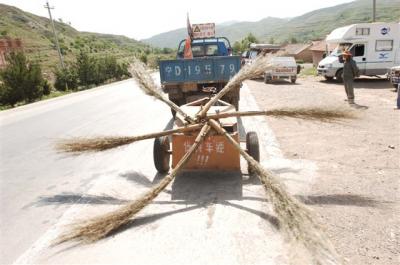
Une balayeuse de la DDE locale. Photo Thomas BREGARDIS
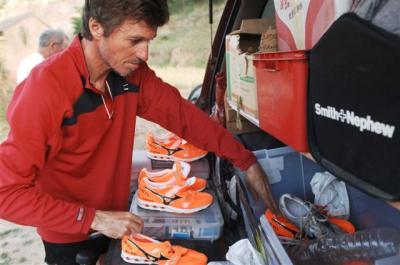
Serge numérote ses chaussures. Photo Thomas BREGARDIS
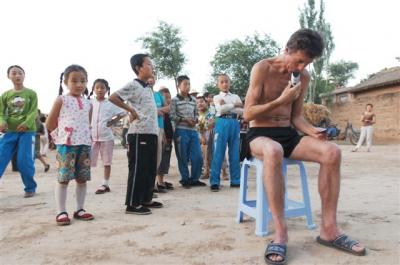
Serge se rase sous le regard des enfants curieux. Photo Thomas BREGARDIS
D181 – 79.5Km
FRIDAY, JUNE 16
N35 39.513 E106 10.248 (2290m – 6 km after Longde) – N35 29.031 E106 48.715 (1275m- 10 km after Pingliang)
79.5 km – 11H10′
Serge left this morning at 7H00 and hardly had time to get into stride before starting a climb to the pass, which he reached 6.5 kilometers later and 400 meters higher, i.e., at 2680 meters. We were almost at the pine covered peak of the Liupan Shan Mountain. It reminded us of the French Vosges Mountains. The old road wound steeply up and at the top we found a massive building which displays the poem Mao Zedoung wrote about the Liupan Shan and 2 statues which commemorate the passage of the 8th army. The personnel at the site were very honored by Serge’s visit and asked him to sign their guest book. There was a dedication ceremony after which the whole team left with souvenir pins. The descent was vertiginous until we reached route 312, which plunged into a moody valley: the mountains are bare, there are no crops and the works on the highway disfigure the environment.
We left the Autonomous Province of Ningxia, created in 1958 for the Moslem ethnic group, the Hui, who live primarily in the south of this province, of which the capital is Yinchuan. We crossed the southern extremity of Ningxia and reached the Gangsu province several kilometers before the city of Pingliang. There was a succession of factories and industries until Pingliang, a town of more than 100,000 inhabitants which is dirty, polluted, dusty and noisy. We had only one desire: to get out as quickly as possible.
Something that plagues us more and more as we cross towns and cities is the Horn. On the road, vehicles hurtling along the road make you shudder because they lean on the horn rather than the brake pedal. When you have spent 11 hours in this incessant noise it’s normal that it drives you crazy We are going mad because the Chinese honk like they breathe. It isn’t surprising that in some cities you see signs indicating that honking is forbidden. A suggestion that could be made to the government would be to limit the number of decibels allowed on vehicle, especially truck, horns.
Thanks to their increased purchasing power, the Chinese are buying. Every year there are more vehicles on the roads and the drivers don’t respect any road code, even though we have noticed that in 18 months speed limit signs have sprung up in eastern China. The road is a jungle, it’s the law of the strongest and noisiest and you can see anything and everything.
This evening we counted 80 people around our camp. We had to wait until 21H00, when night fell, to no longer hear dogs barking and of course, horns honking!