

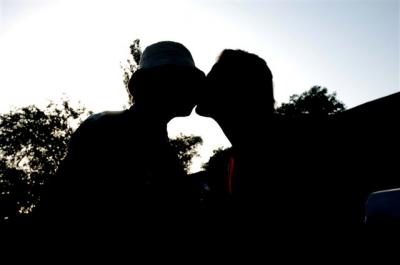
Bisous du matin. Photo Thomas BREGARDIS
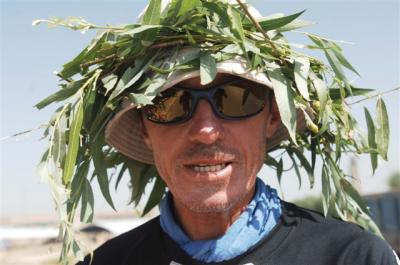
Un feuillage qui donnera un peu de fraîcheur a Serge. Photo Thomas BREGARDIS
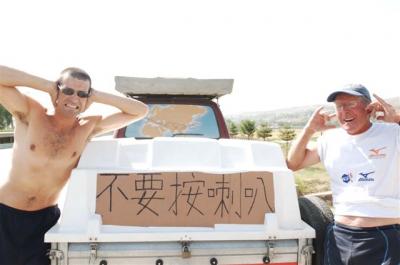
Traduction: "NE PAS KALXONNER" Photo Thomas BREGARDIS
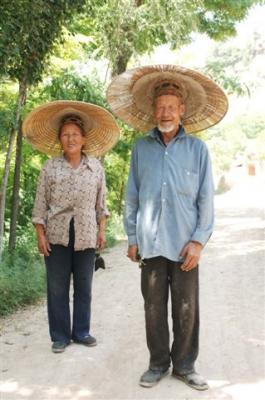
Encombrant mais très efficace comme chapeau. Photo Thomas BREGARDIS
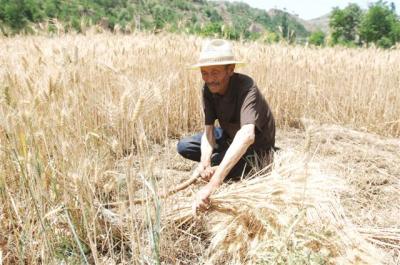
Fin Juin la saison des moissons dans cette partie de la Chine. Photo Thomas BREGARDIS
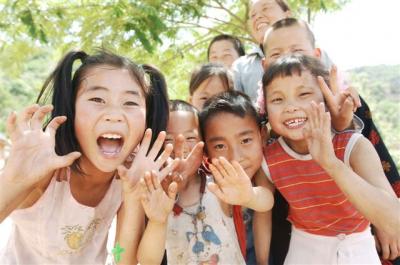
Tranche de vie. Photo Thomas BREGARDIS
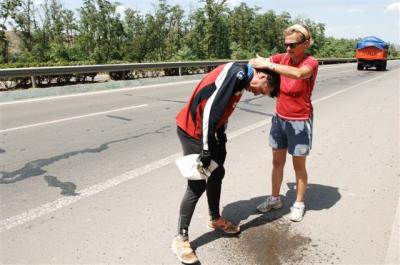
Refroidissement de la machine… Photo Thomas BREGARDIS
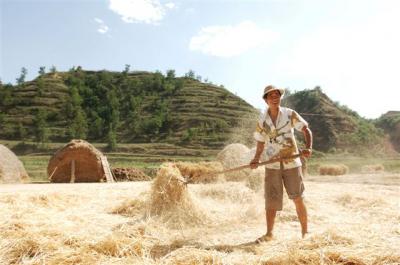
La moisson, travail long et pénible, effectuée dans la bonne humeur Photo Thomas BREGARDIS
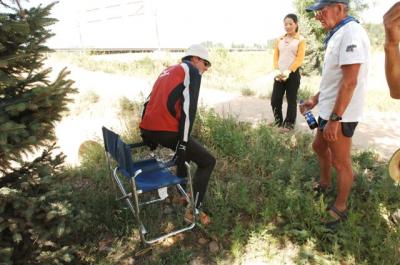
Petite halte pour Serge après un début d’insolation. Photo Thomas BREGARDIS
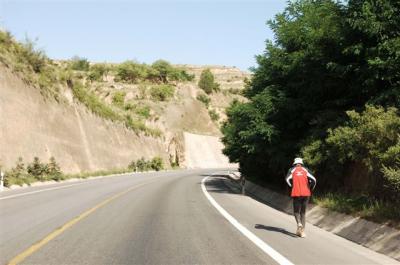
Et comme d’habitude une bonne montée pour finir. Photo Thomas BREGARDIS
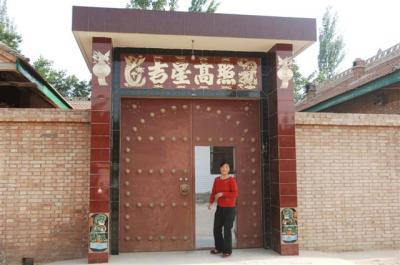
Madame TIAN nous accueille devant sa maison. Photo Thomas BREGARDIS
D182 – 77.7Km
SATURDAY, JUNE 17
N35 29.031 E106 48.715 (1275m- 10km after Pingliang) – N35 18.266 E107 34.405 (1301m)
77.7 km – 11H45′
68th km = 1400 m
That makes a 6% incline at the end of the stage, it hurts!
Regarding the honking horns, we decided to attach a large sign in Chinese characters to the back of the trailer saying: “buyao an laba,” which means “stop honking!”
Serge’s stride was very alert this morning. At 7H30 the temperature was already 30° Celsius and by the end of the morning the thermometer had risen to 47°, the road was in direct sun and there was neither shade nor wind to cool the air. Serge arrived at his 4th feeding with a crown of leaves on his hat. We thought it was a joke but no, he explained very seriously that it brought a bit of coolness. The heat progressively because unbearable. Seated in the shade, doing nothing while we waited for serge, we were perspiring profusely.
After the suburbs of Pingliang we were again in the countryside: route 312 was bordered by wheat fields where activity was intense. Harvesting is done by hand in these small fields and, after the famous climb at the end of the stage, for the first time we saw acres of wheat fields where the combines were at work. Homes seem more luxurious: we are entering eastern China, more prosperous and above all, hotter!
At the 60th kilometer, Serge was struck by the heat, since the last two feedings he has diarrhea and his head spins. He sat down. It’s the first time on this race that he has taken 5 minutes to sit down and recuperate (he has already had to lie down twice because of hypoglycemia)
Sandrine asked Serge a question: “Do you prefer running in the cold or in the heat, in dry or damp weather?”
Serge’s answer: “When it’s cold we would like it to be hot and vice versa.” It’s a Norman answer!
Seriously, Serge has more trouble making an effort in the heat than in the cold. It’s the first crossing where Serge has experienced winter and cold so he can compare the two. The body needs to burn lots of energy to regulate its temperature when it is very hot.
Dry or humid? In Africa, Serge first experienced a humid heat in the West, then the dry heat of the desert. Damp heat is the most difficult. I remember in Sénégal when serge was lying in the tent at night, his burning body was perspiring great drops to evacuate the heat it had accumulated during the day. Dry heat is easier for the followers too. The Paris-Tokyo race is heading toward a humid heat as we approach Shanghai.
We set up camp in front of the house belonging to the Tian family, who very kindly authorized us to camp there. We are in the town of Fei Yun, a few kilometers from the Saanxi Province and tomorrow we will leave the Gangsu Province.
Our night will be agitated because of the incessant passage of heavy trucks on the highway, 100 meters from our ears. Luckily, we have ear plugs.