

74.05km –11H02’
Altitude : 272 m
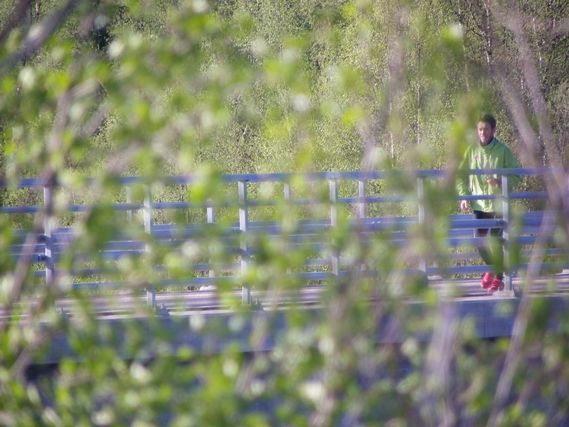
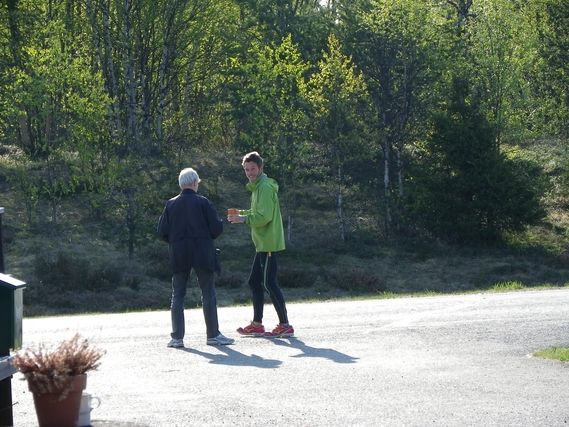
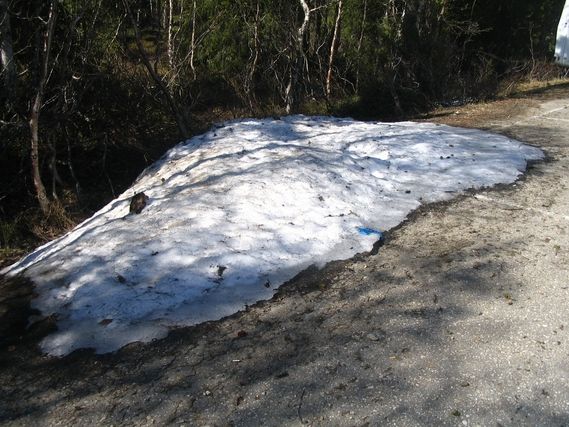
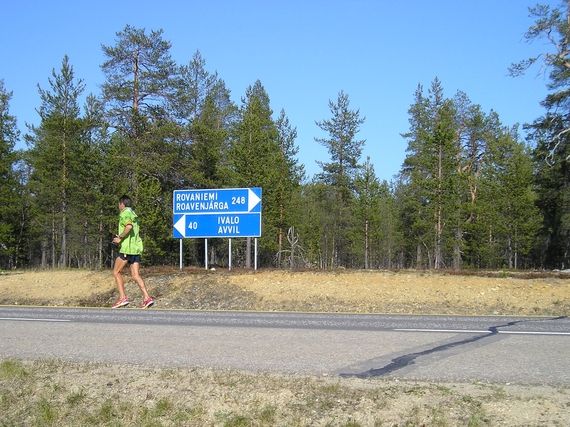
Serge has lead in his “old boots”. He is dragging his feet as if he is unable to lift them and you can hear his heavy steps from far off when the road is silent. The reindeer are legion and graze in herds along the road. Between km 30 and 35, Serge meets two hikers in boots, equipped with a compass and a mountaineer’s pick axe. They ask Serge if everything is OK and the conversation continues, especially when Serge learns that Peter and his partner come from Australia and more specifically from Perth. They live in Cottesloe Beach, a place that Serge and I love. Our dream is to live there one day!!! All this pumps up our runner who, after a good start, seems more interested in looking at his feet than at the scenery. “I’m dragging my feet and looking at the ground, which means I’m not in good form”. At km 35, Eliane and René prepared a good soup for him, with a slice of bread and butter with ham, all of which Serge eats with relish. He takes off his long pants but keeps his jacket on all day. In spite of the sunshine and a beautiful blue sky the air is invigorating.
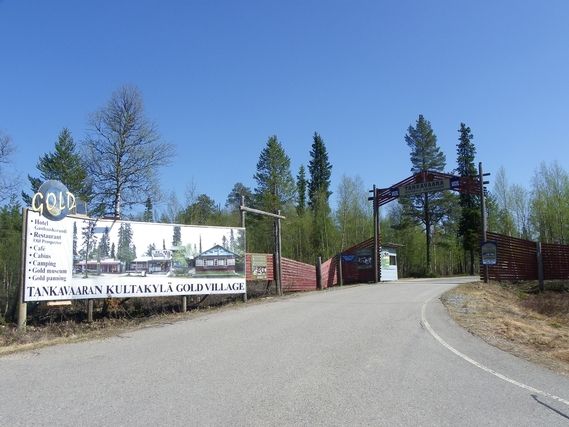
At km 52, the team passes in front of the Tankavaara Gold Panning Area, which is there for folklore and tourism. In 1869, 2 Finns found 2 kilos of gold on the banks of the Ivalojoki River. After that, prospectors arrived but after three summers of prospecting, over a period of 3 months, the companies closed. The weather conditions made it impossible to work long enough and the deposit didn’t appear to be very rich.
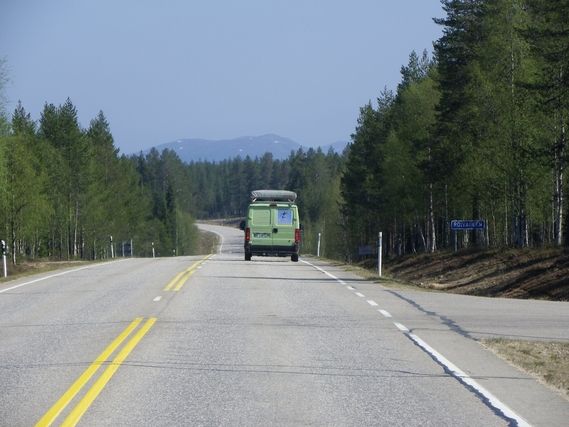
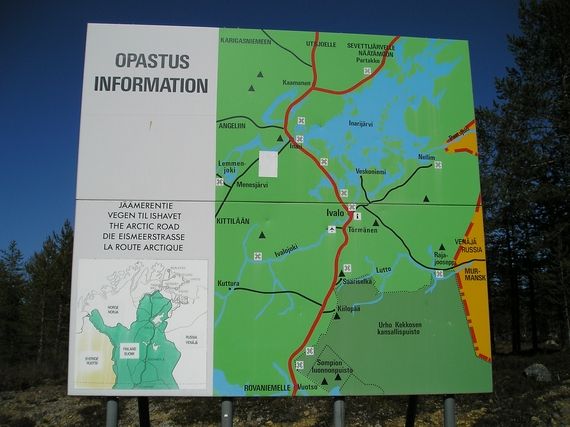
I went as far as Saariselka, which is a ski station. This village welcomes a lot of tourists who also come to go husky sledding or snow biking and all sorts of winter sports activities. Today the village is seems deserted because it operates during the winter season or in the summer from June to August. We are going along the Urho Kekkonen National Park. Starting at Saariselka, there are some 200 km of hiking paths which take you into the wilds of Lapland.
Lastly, there was no chance for us to see the aurora borealis because it is a natural phenomenon that is only visible at night and now it never gets completely dark. The best time to see the aurora borealis is between October and April! Eliane and René had fun taking a photo at 10:00 PM and one at midnight, when there was still daylight.
Town : Kakslauttanen